NVMe Storage Essential for African E-Commerce Speed
Published: · Updated: · 5 min read · By Oluniyi D. Ajao

In e-commerce, speed is revenue. A slow cart or checkout translates directly into abandoned sessions, lower order values, and higher support load. While CDNs and caching help, storage performance is the backbone that keeps product pages, search, carts, and payments responsive under real-world load. That's where NVMe (Non-Volatile Memory Express) becomes essential, especially for fast-growing African platforms operating across variable networks and peak-time surges. This is why African startups choose high-performance VPS with NVMe storage.
Why Storage Bottlenecks Checkout
Modern e-commerce stacks (Magento, WooCommerce, custom Laravel or Node backends) rely heavily on storage for product search, faceted filters, session writes, inventory updates, order placement, and logs. During promotions and pay-day spikes, storage queues become the primary bottleneck. Traditional SATA SSDs improve over HDDs but struggle under high concurrency. NVMe reduces queue latency and increases parallelism, enabling faster read and write operations even as concurrency rises.
- Lower latency: NVMe uses PCIe lanes, offering significantly lower protocol overhead compared to SATA.
- Higher IOPS: NVMe handles numerous small, random requests typical in carts and inventory updates.
- Better concurrency: Native command queues maintain app responsiveness during traffic spikes.
Real Impact on E-Commerce Flows
Product Search and Category Pages
Product search and category pages rely on database indexes. NVMe reduces tail latencies, ensuring the slowest 5 to 10% of requests don't degrade user experience.
Carts and Sessions
Carts and sessions involve frequent writes. NVMe's fast fsync operations minimize lock time and contention, improving responsiveness.
Checkout and Payment Callbacks
Checkout processes and payment callbacks require deterministic I/O to prevent webhook delays or order state issues, reducing risks of double-charges or phantom orders.
For platforms serving Africa, where last-mile network variability can amplify server-side delays, Amazon's research shows every 100ms of latency can reduce sales by 1%. NVMe helps preserve conversions on mobile data networks.
Optimizing Database and Cache with NVMe
NVMe is a foundation, not a cure-all. Pair it with optimized configurations:
- MySQL or MariaDB: Configure InnoDB buffer pool size to at least 70% of available RAM, set log file size to 512MB to 1GB for typical e-commerce workloads, and use O_DIRECT flush policy to leverage NVMe's fast writes.
- Redis: Enable append-only file (AOF) persistence with everysec mode to balance durability and performance, allowing NVMe to handle write bursts efficiently.
- Search (OpenSearch or Elasticsearch): Increase heap size to 50% of RAM (up to 32GB) and optimize shard count to 20 to 50 per node to accelerate merges and query cache warmups on NVMe.
Geography and Network Proximity
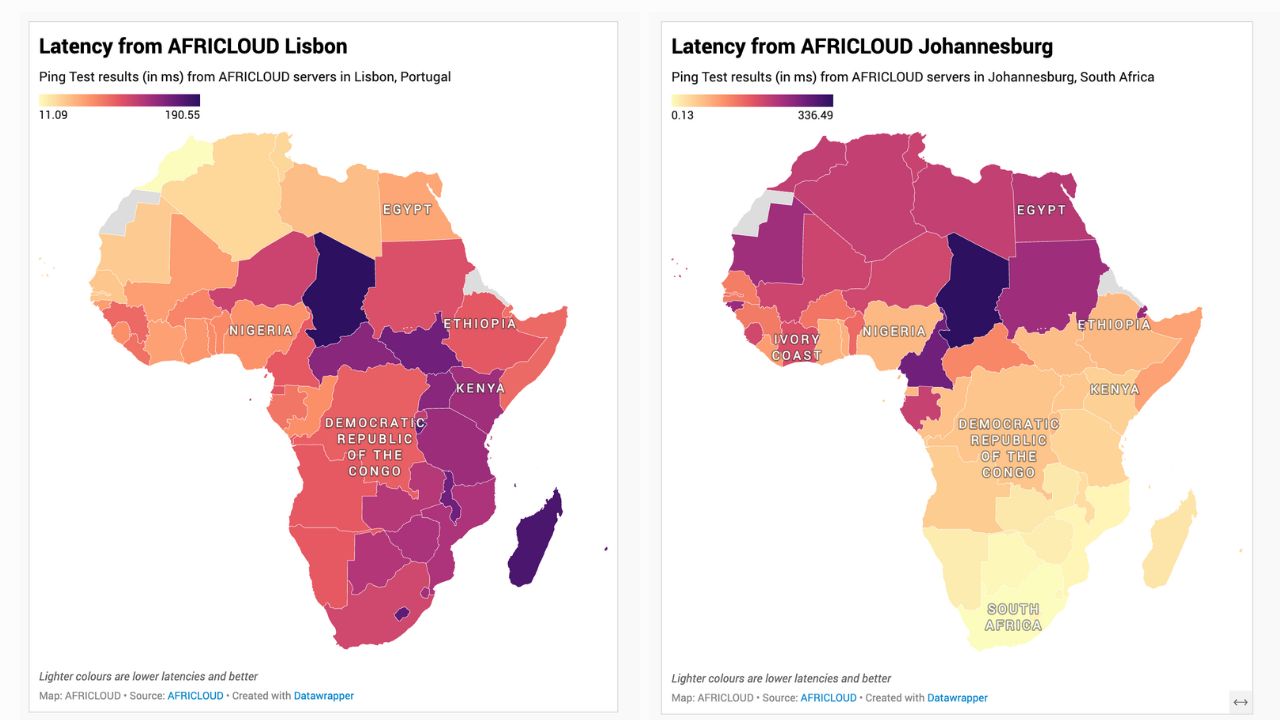
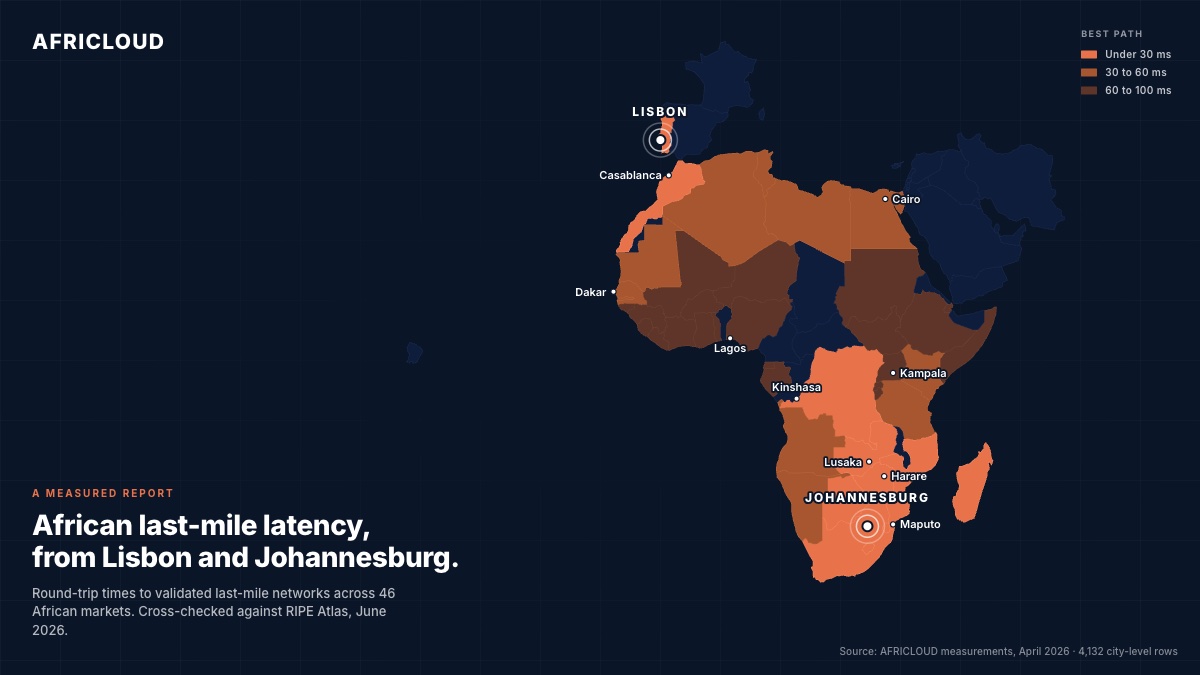
Storage speed addresses server-side contention, but network proximity impacts time-to-first-byte (TTFB). AFRICLOUD operates in Lisbon and Johannesburg for low-latency access to North, West, and Southern Africa. NVMe-backed compute close to customers minimizes both server and network delays.
NVMe Performance Numbers
Understanding the concrete performance differences helps justify the investment:
- Sequential read speeds: NVMe drives typically deliver 3,000‑7,000 MB/s compared to 500‑550 MB/s for SATA SSDs, a 6‑12x improvement
- Random IOPS: NVMe handles 500,000‑1,000,000 IOPS versus 75,000‑100,000 for SATA SSDs, crucial for database workloads
- Queue depth: NVMe supports 64K queues with 64K commands each, while SATA is limited to one queue with 32 commands
- Latency: NVMe typically offers 10‑20 microseconds latency compared to 100+ microseconds for SATA
For e‑commerce, the random IOPS and low latency matter most. Every product page view, cart update, and checkout triggers dozens of small random reads and writes, exactly where NVMe excels.
Real‑World E‑Commerce Scenario
Consider a typical flash sale scenario for an African e‑commerce platform:
- Before sale starts: 50 concurrent users, 500 requests/minute, SATA SSDs handle this comfortably
- Sale begins: 2,000 concurrent users, 25,000 requests/minute, storage queues start building
- Peak traffic: 5,000 concurrent users hitting the same popular products, all trying to add to cart simultaneously
On SATA storage, database query times spike from 5ms to 500ms+ as I/O queues saturate. Pages that loaded in 200ms now take 2‑3 seconds. Cart abandonment increases dramatically.
With NVMe, the same load shows query times rising from 5ms to perhaps 15ms, noticeable only in monitoring dashboards, not by users. The difference between a successful sale and a crashed site often comes down to storage performance.
Mobile‑First Africa: Why Speed Matters More
Africa's e‑commerce market is predominantly mobile‑first, with 70‑80% of transactions happening on smartphones. This creates unique performance challenges:
- Network variability: Mobile data connections fluctuate between 3G and 4G, sometimes within a single session
- Battery and data concerns: Users expect pages to load quickly to conserve battery and mobile data
- Retry behaviour: Slow responses often trigger multiple retry taps, compounding server load
- Session timeout risks: Payment gateway callbacks may timeout if server responses are too slow
Fast NVMe storage compensates for network variability by ensuring the server‑side component is always responsive. When a user on an unstable connection finally gets through, the server responds instantly rather than adding more delay.
Cost vs. Benefit of NVMe
Upgrading from SATA SSD to NVMe offers significant UX improvements per dollar: fewer timeouts, faster admin actions, quicker batch jobs (such as catalog imports), and stable performance during peaks. NVMe complements caching and CDNs by reducing origin penalties during cache misses.
The ROI calculation is straightforward: if faster storage prevents even a small percentage of cart abandonments during peak sales periods, it pays for itself many times over. For a store doing $100,000/month in revenue, preventing 2% additional abandonment is worth $2,000/month, far exceeding any storage cost difference.
How AFRICLOUD Supports E-Commerce
- NVMe on all VPS plans for consistent low-latency storage.
- Strategic locations: Lisbon, Johannesburg and Lagos for proximity to African buyers.
- High-capacity networking: Optimized peering and uplinks to minimize jitter.
- Multilingual support: Six-language support with a streamlined ordering process.
- Flexible payments: Pay with Bitcoin and 300+ cryptocurrencies or traditional methods.
Whether scaling WooCommerce, Magento, or a custom stack, NVMe-backed VPS in the right region ensures fast carts and reliable checkouts. Learn more about what you control with self-managed VPS.
Next Steps for Implementation
Analyze your slowest flows (search to product page to cart to checkout) and migrate to NVMe in your closest region. Moving from another host? Follow our VPS migration guide. Visit AFRICLOUD's plans to select Lisbon or Johannesburg based on your customer base. Test latency with our Looking Glass tool before ordering. Our team can assist with latency mapping and zero-downtime migration.
Sources
- NVMe vs. SATA SSD performance: IBM
- Latency impact on e-commerce sales: GigaSpaces (citing Amazon)
- Website performance and conversions: Cloudflare
- Low-latency connectivity in Africa: Paratus
- Mobile network performance in Africa: Opensignal
- MySQL or MariaDB optimization: MySQL Documentation
- Redis persistence best practices: Redis Documentation
- Elasticsearch or OpenSearch performance tuning: OpenSearch Documentation